
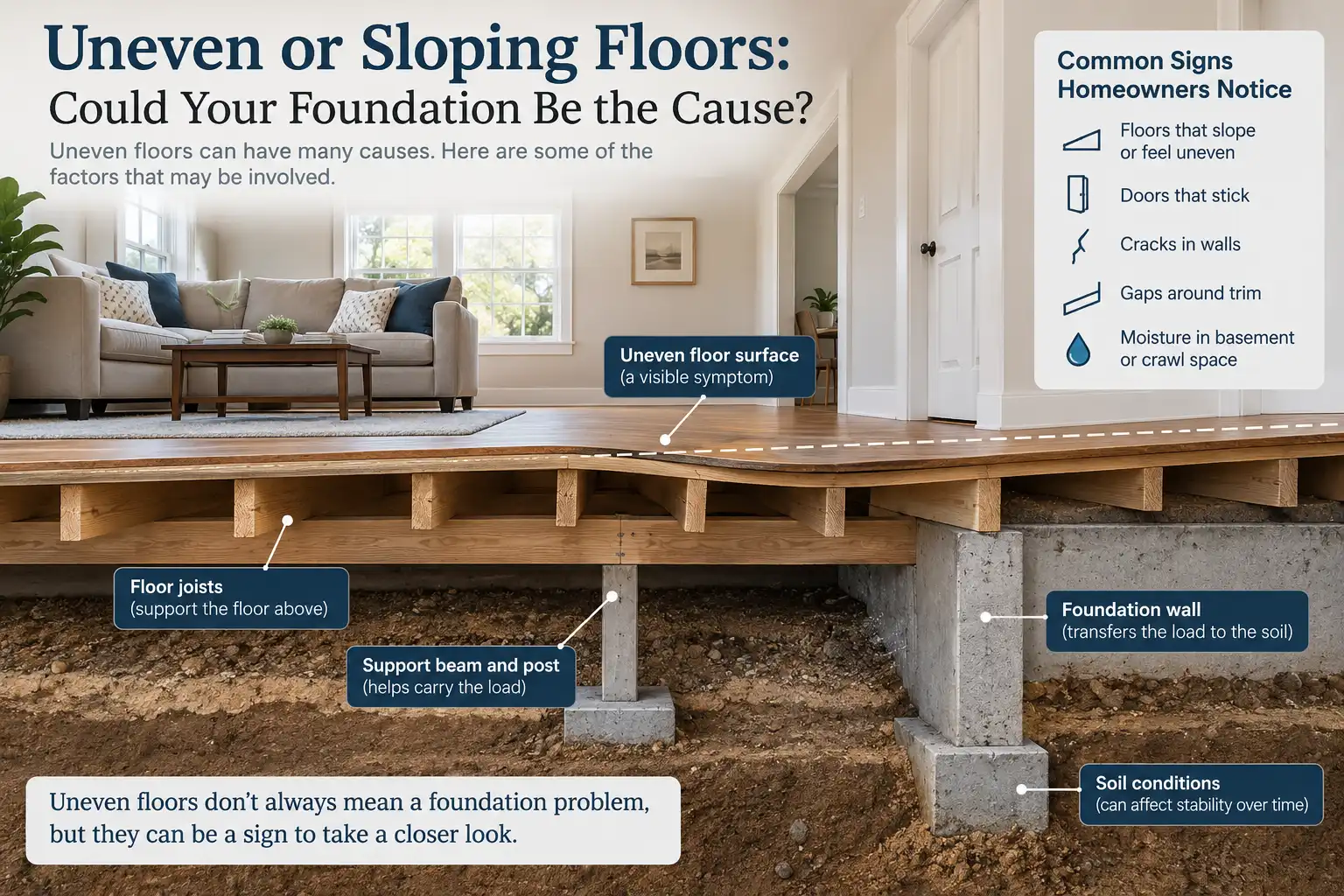
A floor that feels uneven, slopes in one direction, or seems to sag over time can be concerning for homeowners. You may notice furniture rocking, doors becoming harder to operate, gaps appearing near trim, or certain areas of your home feeling different when you walk across them.
Uneven floors can happen for many reasons. In some cases, changes in the foundation or supporting structure may contribute to the issue. However, an uneven floor alone does not confirm a foundation problem. The cause may also involve floor framing, moisture, support systems, materials, or other building conditions.
For Greater St. Louis homeowners noticing changes in their floors, understanding possible causes and related warning signs can help determine when a professional evaluation may be appropriate.
What Causes Uneven Floors?
Uneven floors develop when something affects the way a floor system is supported or how materials move over time.
Possible causes include:
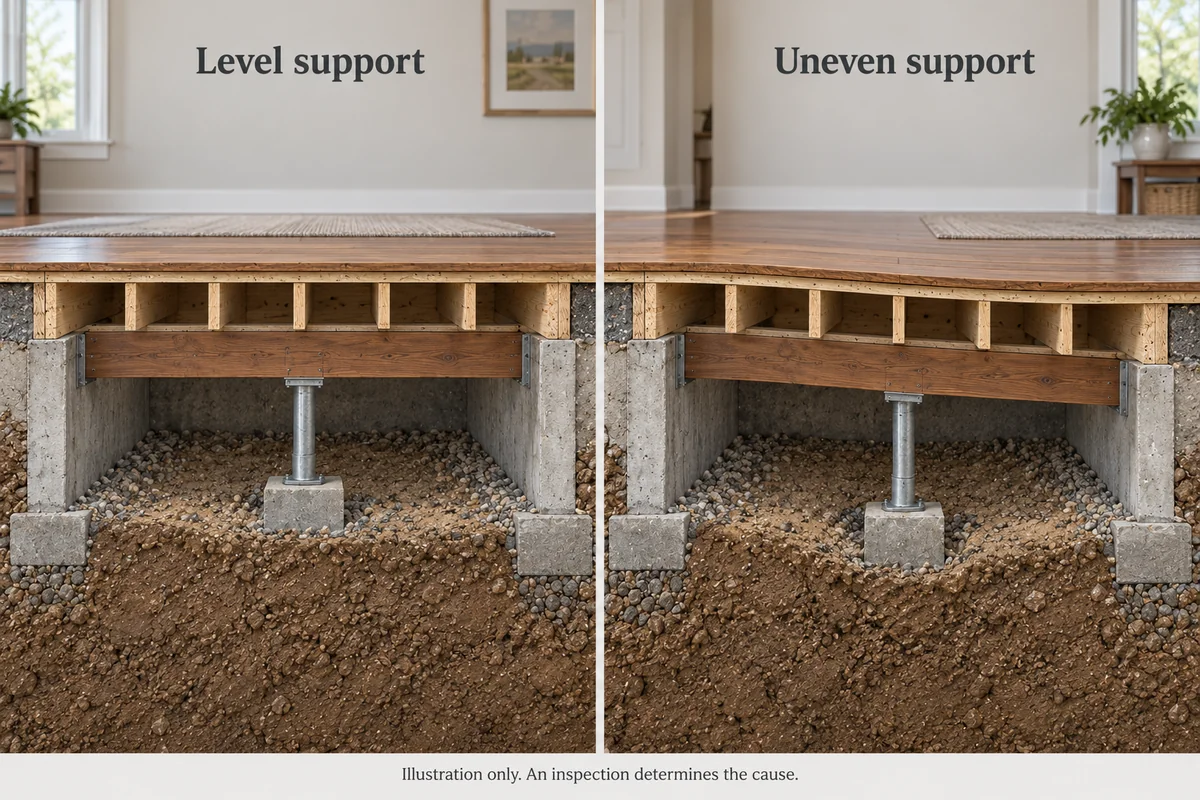
- Changes in floor joists, beams, or support points
- Moisture-related damage or material changes
- Settlement or movement affecting foundation support
- Issues with crawl space supports or piers
- Movement beneath concrete slab floors
- Gradual bending or changes in the dimensions of wood framing
Because floors are connected to many parts of a home, identifying the cause usually requires looking at the overall condition of the structure rather than focusing only on the floor surface.
Could Foundation Problems Cause Uneven Floors?
Foundation movement can sometimes contribute to uneven floors. A home’s foundation supports the structure above, and changes in foundation support may affect floors, walls, doors, and other areas of the home.
For example, if one portion of a foundation or supporting element moves differently from another area, homeowners may notice changes throughout the structure. These changes can sometimes include sloping floors or other alignment issues.
The American Society of Home Inspectors (ASHI) explains that foundation settlement can have various causes and that evaluating signs such as movement, cracking, and other conditions requires considering the overall situation rather than relying on one symptom alone. Homeowners can review ASHI’s information on settling foundations, causes, warning signs, and repairs for additional background.
However, uneven floors are not always caused by foundation problems. A floor that slopes may also be related to framing, moisture, support beams, or other conditions that should be evaluated before deciding on a solution.
Signs That May Be Worth Investigating Alongside Uneven Floors
An uneven floor becomes more useful to evaluate when it appears with other noticeable changes around the home.
Sticking Doors and Windows
Doors and windows that suddenly become difficult to open or close may indicate that something around the opening has changed.
This does not automatically mean the foundation is the cause, but it can provide useful information when considered with other observations. Homeowners noticing these changes can learn more in Why Are My Doors and Windows Suddenly Sticking?.
New or Changing Wall Cracks
Cracks can occur for many reasons, and their significance depends on factors such as location, size, direction, and whether they are changing over time.
Homeowners who notice cracks along with uneven floors may want to document their location and appearance. Understanding different crack patterns can help homeowners communicate observations during an evaluation. Learn more about different types of foundation cracks and what homeowners should know.
Gaps Around Trim, Walls, or Openings
Changes around trim, baseboards, doors, or windows can sometimes occur when parts of a home move differently.
Examples homeowners may notice include:
- Gaps between trim and walls
- Separation around door frames
- Changes where flooring meets walls
- Trim that appears to pull away from a surface
These observations alone do not identify the cause, but they can help create a clearer picture of what is happening.
Basement or Crawl Space Changes
The area beneath the floor can provide important clues about possible causes.
Homeowners may notice:
- Moisture or damp areas
- Cracks in basement walls
- Changes around support posts or beams
- Water entry after storms
If moisture is present, understanding where water enters and how it affects the structure is an important part of evaluating the situation. Homeowners can also review common basement water entry causes in Basement Leaking After Heavy Rain: Common Causes and Solutions.
Other Causes of Uneven Floors Besides Foundation Movement
Before assuming an uneven floor is related to the foundation, homeowners should consider other possible explanations.
Floor Joist or Beam Problems
Homes with raised floor systems rely on components such as joists, beams, and support points to carry loads.
Changes may occur because of:
- Gradual bending or changes in the dimensions of wood framing
- Moisture exposure
- Previous modifications
- Changes in support conditions
A floor problem may sometimes involve the floor system itself rather than the foundation.
Moisture-Related Issues
Water exposure can affect building materials over time.
Potential sources include:
- Plumbing leaks
- Basement moisture
- Crawl space humidity
- Drainage issues around the home
Identifying the source of moisture is an important step before determining what repairs may be appropriate.
Uneven Concrete Slabs
Homes with concrete slab floors can experience uneven areas for different reasons, including changes below the slab.
Depending on the situation, some concrete surfaces may be candidates for lifting solutions. The appropriate approach depends on the specific conditions involved. Learn more about Polyjacking and concrete lifting options.
When to Seek Urgent Help
If a floor suddenly sags, changes rapidly, or feels unsafe to walk on, stop using the affected area and arrange urgent professional assessment. Do not go beneath an unstable floor or try to adjust its supports yourself. If collapse appears imminent, leave the building and contact emergency services.
How Homeowners Can Document Uneven Floors
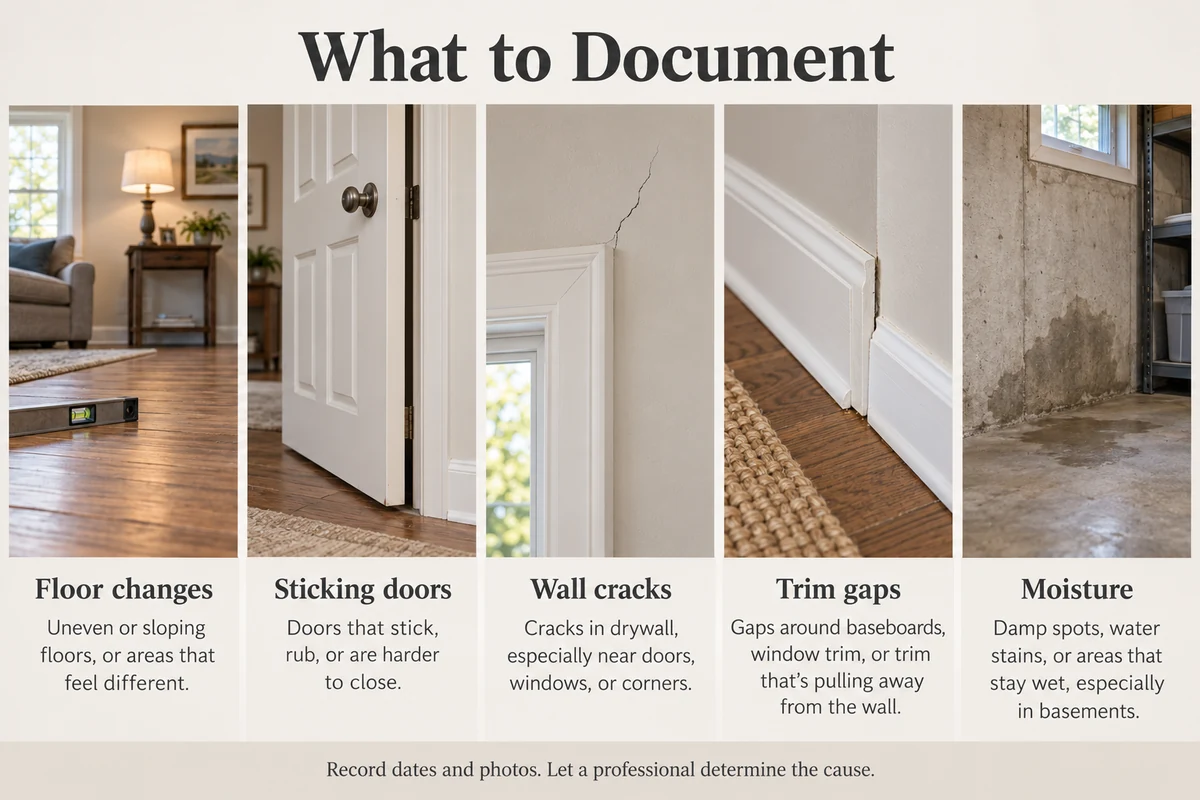
Homeowners can gather useful information without attempting to diagnose the cause.
Look for Patterns
Consider:
- Is the uneven area limited to one room?
- Does it extend through multiple areas?
- Is it near an exterior wall?
- Did it develop gradually or appear suddenly?
Document Related Changes
Photos and notes can help track changes over time.
Consider recording:
- When the issue was first noticed
- Locations where floors feel uneven
- Nearby cracks or gaps
- Changes in doors or windows
- Moisture observations
Avoid Assuming the Cause From One Symptom
A sloping floor can be an important observation, but it does not explain why the condition exists.
A professional evaluation may consider multiple factors, including the foundation, floor system, support points, and moisture conditions.
Frequently Asked Questions About Uneven Floors and Foundation Problems
Can uneven floors mean foundation problems?
Uneven floors can sometimes be associated with foundation movement, but they can also result from floor framing, moisture, or other building conditions. The cause needs to be evaluated based on the full situation.
Are sloping floors always a serious foundation issue?
No. A sloping floor does not automatically indicate a serious foundation problem. Other factors, including the age and construction of the home, should be considered.
What other signs can occur with foundation movement?
Possible related observations include cracks, sticking doors or windows, gaps near trim, and changes in basement or crawl space conditions.
Can foundation problems cause sagging floors?
Foundation movement or changes in foundation support may contribute to floor changes, but sagging floors can also have other causes.
Should I repair uneven floors before finding the cause?
The cause should generally be understood before selecting a repair approach. Fixing the visible symptom without addressing the reason it occurred may not solve the underlying issue.
Final Thoughts: Understanding Uneven Floors
Uneven or sloping floors can have several possible causes. In some homes, foundation movement may play a role, while other situations may involve framing, moisture, support systems, or other building components.
The most helpful first step is documenting what has changed and looking for other signs occurring at the same time.
If you have noticed uneven floors along with cracks, sticking doors, moisture concerns, or other changes in your Greater St. Louis home, a professional evaluation can help determine what factors may be contributing to the condition. Learn more about foundation repair services from Crack Wizard and request an evaluation to discuss your concerns.