Cracks in a basement wall, a door that suddenly sticks, or a floor that feels uneven can make any homeowner wonder whether something is happening beneath the house.
These conditions can be signs of foundation problems, but they do not automatically mean your home has serious structural damage. Concrete and masonry can crack for many reasons, and changes inside a house can have causes unrelated to the foundation. The American Concrete Institute notes that the significance of concrete cracking depends on the structure and the nature of the cracking.
What matters is recognizing unusual or changing conditions and knowing when professional evaluation makes sense.
Here are 10 warning signs St. Louis homeowners should pay attention to.
Do Signs of Foundation Problems Always Mean Structural Damage?
No. A visible crack or sticking door alone is not enough to diagnose a foundation problem.
For example, concrete can crack as it cures, finishes and building materials can move over time, and doors may become difficult to operate for reasons that have nothing to do with the foundation. InterNACHI also notes that moisture and thermal movement can sometimes be mistaken for settlement-related problems.
Instead of focusing on one symptom, pay attention to the overall pattern.
A condition may deserve closer evaluation when it is new, appears to be changing, occurs in several parts of the home, or appears alongside other warning signs.
10 Warning Signs of Foundation Problems to Watch For
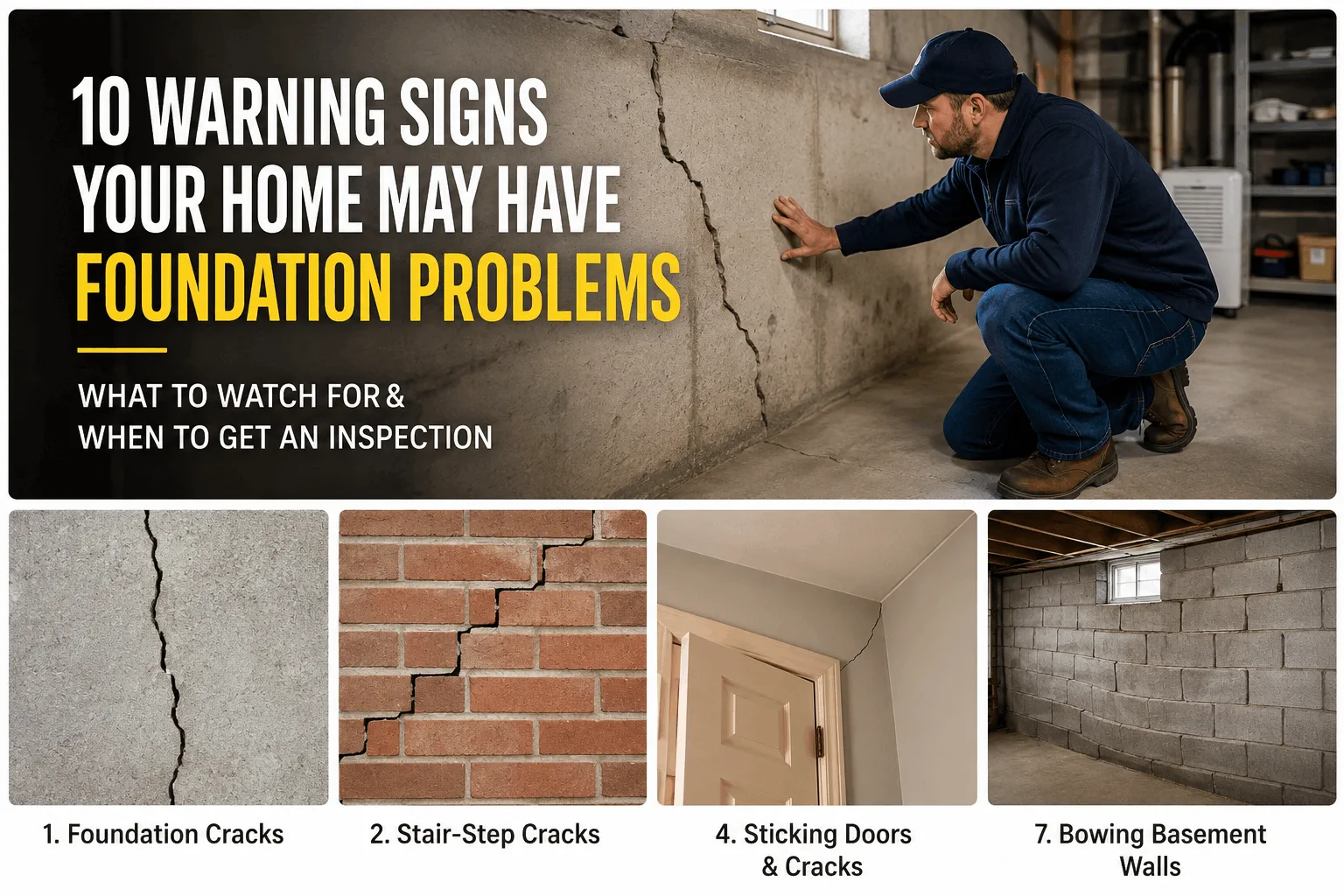
1. Foundation or Exterior Cracks That Are Changing
Cracks are often the first thing homeowners notice, but the presence of a crack does not tell you by itself what caused it or whether structural repair is necessary.
Pay particular attention to a crack that appears new or seems to be getting longer, wider, or otherwise changing. Also note whether there are related conditions nearby, such as moisture, wall movement, or changes around doors and windows.
ACI guidance recognizes that concrete cracking has numerous possible causes and that evaluating a crack requires considering the circumstances rather than simply deciding whether a crack exists.
If you are uncertain about a foundation-wall crack, a professional evaluation can help determine the condition and whether foundation crack repair or another response is appropriate. Crack Wizard currently provides crack repair services for St. Louis-area homeowners.
2. Stair-Step or Diagonal Cracks in Brick or Block
A crack that follows mortar joints in a stair-step or diagonal pattern deserves attention, particularly when it appears to be changing.
InterNACHI notes that cracking associated with uneven settlement can occur near corners and openings and may follow a rough diagonal along mortar joints. It also emphasizes that masonry cracking can have causes other than settlement.
That distinction matters. A homeowner usually cannot determine the underlying cause just by looking at the shape of a crack.
If you notice new stair-step cracking, take clear photographs and periodically compare the condition. If the crack is changing or appears with other signs of movement, consider having it professionally evaluated.
3. New or Expanding Interior Wall and Ceiling Cracks
Drywall and plaster cracks are common in homes and are not automatically evidence of a foundation problem.
However, a pattern of new or expanding cracks can justify a closer look. Pay attention to cracks around doorways or windows, cracks that repeatedly return after cosmetic repairs, or several new cracks appearing within the same area of the house.
InterNACHI identifies cracking of interior finishes among conditions that can accompany differential settlement, particularly when related symptoms are also present.
The key is context. A single small drywall crack provides limited information. Several changing conditions occurring together can provide a stronger reason to request an evaluation.
4. Doors and Windows That Begin Sticking
One door that rubs against its frame does not prove that a foundation is moving. Hinges, humidity, framing, installation, and other conditions can affect how doors and windows operate.
A change across multiple openings is more noteworthy.
For example, you may notice that a door that previously closed normally begins rubbing, a window becomes difficult to open, or an opening looks visibly out of square.
Sticking doors and windows are among the observable conditions InterNACHI associates with possible uneven settlement, particularly when seen with other symptoms such as cracking or sloping floors.
If several doors or windows are changing at the same time, document what you see rather than trying to diagnose the cause yourself.
5. Uneven or Sloping Floors
Floors can feel uneven for many reasons, including issues with flooring materials, framing, joists, or other parts of the building.
Foundation movement is one possible explanation, but it is not the only one.
What may deserve attention is a noticeable change in a floor that previously seemed level, especially when the condition appears alongside wall cracks, sticking openings, or other signs elsewhere in the home. Sloping floors are one of the conditions InterNACHI identifies as potentially associated with settlement.
Rather than relying on a DIY measurement to make a structural conclusion, note where the change occurs and have the underlying structure evaluated if you are concerned.
6. Gaps Between Walls, Ceilings, Floors, Doors, or Windows
Unexpected separations between building components can sometimes appear as different parts of a house move relative to one another.
You might notice a gap where a wall meets the ceiling, separation near the floor, or a growing space around a door or window.
These gaps can have more than one possible cause. Their importance depends on the location, whether they are changing, and whether other symptoms are present.
Crack Wizard includes gaps between walls and ceilings or floors, as well as gaps around exterior doors and windows, among the warning signs it evaluates as part of its foundation repair services in St. Louis.
7. Bowing or Leaning Basement Walls
A basement wall that appears to bow, lean, or move out of alignment deserves professional attention.
Unlike a small isolated finish crack, visible wall displacement involves the position of the wall itself. The cause and significance cannot be determined reliably from appearance alone.
Masonry walls can crack, lean, or bulge for different reasons, and a proper evaluation should consider the wall construction, crack pattern, amount of movement, surrounding conditions, and other parts of the structure. InterNACHI discusses leaning and bulging walls among possible masonry concerns requiring closer investigation.
If a basement wall appears to be moving, avoid attempting to diagnose or brace it yourself. Have the condition evaluated by an appropriately qualified professional. Depending on the circumstances, consultation with a structural engineer may also be appropriate.
8. A Chimney That Appears to Lean or Separate From the House
A chimney that appears to be pulling away from the house can be another visible sign worth investigating.
Look for a widening space between the chimney and the exterior wall, changing cracks where the chimney meets the house, or a chimney that appears noticeably out of alignment.
There can be different reasons for chimney movement or separation, so appearance alone cannot establish whether the home’s main foundation is responsible. Crack Wizard includes chimney leaning or separation among the conditions considered when evaluating potential foundation problems.
If the separation appears new or is progressing, professional evaluation is a sensible next step.
9. Recurring Basement Water or Seepage Near Foundation Walls
Basement water deserves attention, but it is important to separate a moisture problem from a structural diagnosis.
Water can enter a basement through cracks, joints, or other pathways without proving that significant foundation movement has occurred. At the same time, water appearing through a visible wall crack may make it especially important to determine both where the water is entering and what condition the crack is in.
Crack Wizard identifies basement water seepage among the conditions homeowners may notice around foundation problems and provides separate basement waterproofing services for water-intrusion concerns.
If you have recurring seepage, document where and when the water appears. An evaluation can help distinguish a waterproofing problem from a condition that also requires foundation or crack repair.
10. Crumbling, Flaking, or Deteriorating Foundation Concrete
Not every surface defect in concrete means that a foundation is structurally compromised. However, concrete that appears to be crumbling, flaking, or deteriorating is worth examining.
Pay attention to whether the deterioration is limited to the surface or appears to be progressing deeper into the material. Also note nearby moisture, exposed material, cracking, or other visible changes.
ACI defines concrete repair broadly as correcting or replacing damaged, deteriorated, or faulty material or components, but determining the appropriate response depends on evaluating the actual condition.
Crack Wizard also includes crumbling or flaking concrete among its listed foundation warning signs.
When Should Foundation Warning Signs Be Taken More Seriously?
There is no single visual symptom that allows a homeowner to diagnose every foundation condition.
Instead, consider what is changing and what is happening together.
A professional evaluation becomes more reasonable when you notice conditions such as:
- cracks that appear to be growing or changing
- several new cracks appearing in related areas
- sticking doors or windows together with wall cracking
- noticeable floor changes occurring with other symptoms
- a basement wall that appears bowed or displaced
- visible chimney separation that appears to be progressing
- recurring water entering through foundation-wall cracks
- multiple warning signs developing in the same part of the home
Avoid relying on a universal crack-width rule to decide whether a foundation is safe. ACI notes that the significance of cracking depends on the nature of the crack and the structure involved.
If you see substantial or abrupt structural movement, or you are concerned about the safety of part of the structure, seek prompt professional evaluation. A structural engineer may be appropriate when an independent structural assessment is needed.
What Can You Check Before Scheduling an Inspection?
You do not need to diagnose the foundation yourself. You can, however, document what you are seeing.
Take photographs of visible cracks, gaps, or other changes and keep the date with the images. Note where each condition is located and whether it appears on the interior, exterior, basement wall, floor, or masonry.
It can also help to record whether:
- the condition is new or has been present for years
- a crack appears to be changing
- doors or windows in the same area have changed
- nearby floors feel different than they previously did
- water appears around the same location
- similar symptoms are appearing elsewhere in the house
Comparing dated observations can give a foundation professional more useful information than relying on memory alone.
Do not attempt to remove structural components, excavate around the foundation, or make structural repairs simply to investigate a suspected problem.
When to Schedule a Foundation Inspection in St. Louis
You do not have to know whether you need foundation repair before requesting an inspection. Determining what is causing the condition is part of the evaluation process.
If you are seeing foundation cracks, changing interior cracks, sticking doors and windows, uneven floors, wall movement, or several warning signs occurring together, a professional inspection can help you understand what is happening and what options may be appropriate.
Crack Wizard provides foundation repair in St. Louis and surrounding areas and currently offers free foundation inspections and estimates.
An inspection does not mean every home will require the same repair. The appropriate next step should depend on the actual condition of the foundation and the cause identified during the evaluation.
Pay Attention to Changes, Not Just Cracks
Seeing a crack or other unusual condition in your home can be concerning, but one symptom does not automatically mean the foundation is failing.
Watch for patterns: conditions that are new, changing, or appearing together deserve more attention than an isolated symptom that has remained unchanged.
If you are noticing multiple signs of foundation problems or a condition that appears to be progressing, consider having the foundation professionally evaluated. Crack Wizard can inspect the condition and help determine whether foundation repair, crack repair, waterproofing, another solution, or continued observation is appropriate.