
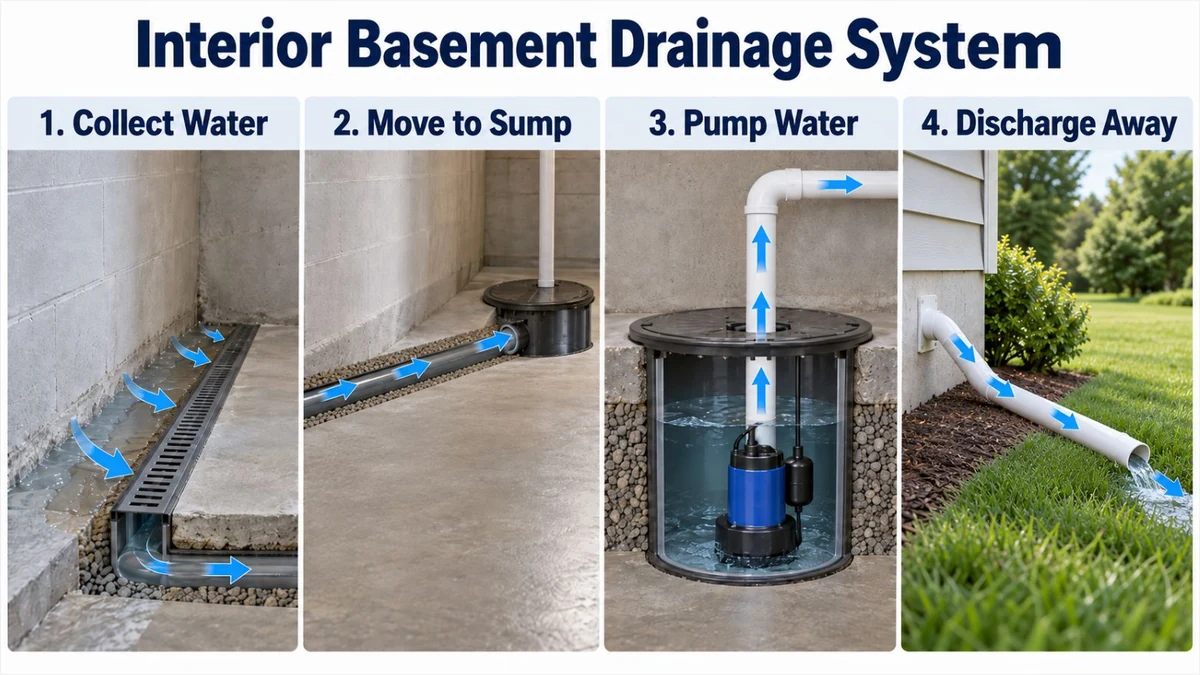
An interior basement drainage system is designed to collect and manage certain types of water that reach the inside perimeter of a basement and direct that water to a sump basin for removal. For homeowners researching basement waterproofing options, understanding how these systems collect water, how sump pumps operate, and what the system can and cannot address can help clarify whether this approach matches their situation.
An interior drainage system focuses mainly on managing bulk liquid water. It is not designed to eliminate every possible moisture source. Condensation, indoor humidity, plumbing leaks, vapor movement, and structural concerns such as foundation movement may require separate evaluation or different solutions.
The design of an interior drainage system depends on the home’s construction and the conditions being addressed. Some systems use an above-slab channel, some collect near the slab edge, and others use a below-slab collector. These approaches have different collection capabilities, and there is no universal pipe location, elevation, or layout that applies to every basement.
The Main Components of an Interior Basement Drainage System
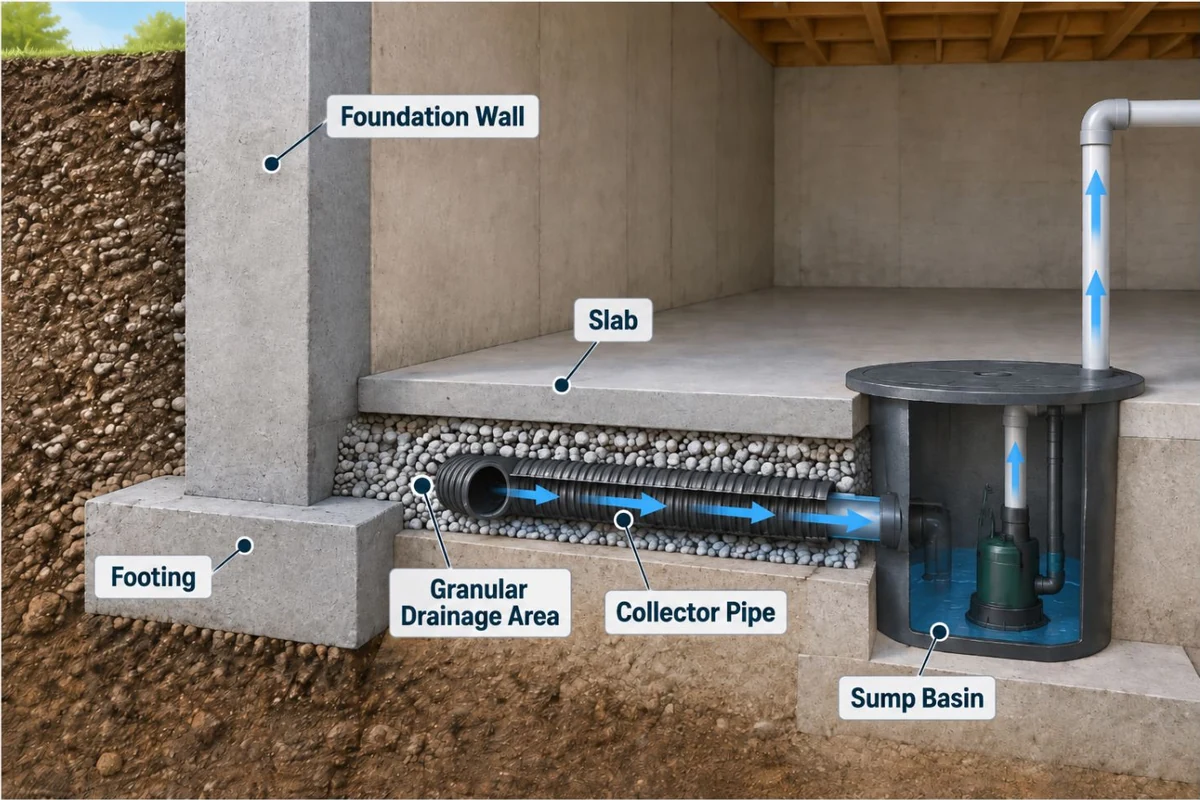
Collection Area
The collection area is the part of the system where water is gathered before moving toward the sump basin. Depending on the design, this may be an above-slab channel, a slab-edge drainage pathway, or a below-slab collector.
These systems are intended to provide a controlled route for collected water. However, groundwater behavior depends on the surrounding soil, foundation construction, drainage conditions, and other site factors. Water can move through cracks, joints, and other pathways in a foundation system. A drainage system does not mean groundwater can never contact the wall or exist beneath the footing.
Instead, the collector provides a designed pathway for water that reaches the drainage system to move toward collection and removal.
Drainage Pathway and Collector
Many interior drainage systems include a drainage area with granular material and a hollow collector that helps move collected water toward a sump basin. The collector is part of the designed drainage route and is not intended to replace the structural function of the foundation wall or footing.
A well-connected subslab drainage system may reduce local groundwater pressure in the area where the drainage pathway can collect water, depending on soil connectivity, drainage capacity, and site conditions. However, this does not guarantee relief of all lateral soil pressure against a foundation wall, and it does not structurally stabilize a bowing or moving wall.
Signs such as significant cracking, wall movement, or bowing may require separate evaluation. Basement water management and structural repair address different concerns.
Sump Basin and Pump
After water reaches the collection point, it is directed into a sump basin. The basin provides a controlled location where collected water can accumulate before the pump removes it.
Most sump systems are designed to operate automatically. When water reaches the pump’s activation point, the pump moves water through discharge piping and directs it away from the basement.
A fitted sump cover helps limit soil-gas entry while preserving access for professional inspection and maintenance. Homeowners should avoid blocking access areas or making changes that prevent the system from being evaluated later.
Discharge System
The discharge piping carries pumped water away from the sump basin. A properly planned discharge route should move water away from the foundation area and avoid conditions where water simply returns toward the same location.
The appropriate discharge approach depends on the property, drainage conditions, and applicable requirements. Homeowners should ask how the proposed system handles discharge and how the outlet location helps prevent recirculation.
How Water Moves Through an Interior Drainage System
The general process works as a connected sequence:
- Water reaches the collection area: Water entering the designed collection pathway is gathered by the drainage system.
- Collected water moves through the drainage route: The collector guides water toward the sump basin.
- The sump basin collects water: The basin provides a controlled point for pump operation.
- The pump removes water: The automatic pump moves water through discharge piping.
- Water exits away from the home: The discharge route directs water away to reduce the chance of return.
The Building America Solution Center explains basement drainage and sump pump systems as connected components that collect water, move it to a sump, and discharge it away from the building.
Interior Drainage System Types and Their Differences
Above-Slab Channel Systems
An above-slab channel collects water at or near the basement floor surface. An above-slab channel does not drain groundwater from beneath the slab.
Slab-Edge Collection Systems
A slab-edge approach collects water near the transition between the basement wall and floor. Its effectiveness depends on the construction details and the pathways available for water to reach that collection area.
Below-Slab Collector Systems
A below-slab collector is designed to gather water through a pathway beneath the slab area. Because it accesses conditions below the floor surface, it may address different water pathways than an above-slab approach.
The correct system depends on the home’s construction and the specific water conditions being evaluated. A drainage method should be selected based on observed conditions rather than assuming one design works for every basement.
What an Interior Basement Drainage System Does Not Address
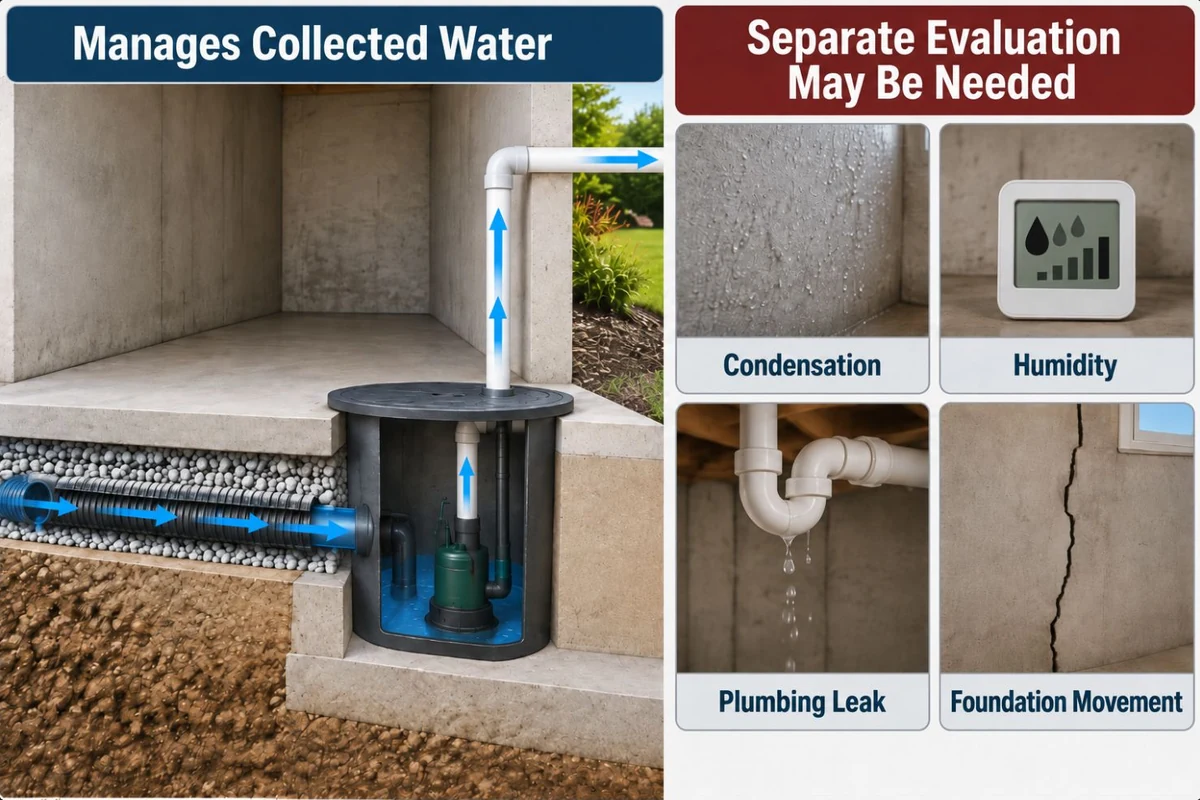
An interior drainage system can help manage collected liquid water, but it is not a complete solution for every basement moisture concern.
- Condensation: Moist air contacting cooler basement surfaces can create condensation that is unrelated to groundwater collection.
- Humidity: Managing indoor humidity with appropriate humidity control or dehumidification may be necessary when moisture levels are elevated.
- Plumbing leaks: Water from plumbing failures requires attention to the plumbing source.
- Vapor movement: Moisture moving through materials may require different approaches than collecting liquid water.
- Structural concerns: Foundation movement, cracking, or bowing may need separate evaluation.
The Environmental Protection Agency notes that controlling moisture sources and maintaining appropriate indoor conditions are important parts of reducing mold-related concerns. Moisture management may involve addressing water entry, humidity, and other contributing factors.
Questions Homeowners Should Ask About Basement Drainage
Before selecting a basement waterproofing approach, homeowners can ask questions that clarify the purpose and limits of the proposed system:
- What type of water problem is this system designed to manage?
- Where does the collection pathway begin?
- How does water travel to the sump basin?
- Where will discharged water exit outside the home?
- How will the system remain accessible for maintenance?
- Are there separate concerns involving cracks, movement, or foundation conditions?
Homeowners can also review information from the University of Minnesota Extension, which explains that basement moisture problems can have multiple causes, including drainage conditions, groundwater, condensation, and humidity-related issues.
Safe Observations Before a Professional Evaluation
Homeowners can gather useful information without attempting repairs. Helpful observations may include where moisture appears, whether water is visible after certain weather conditions, whether a sump pump operates, and whether exterior discharge appears to return near the foundation.
Do not attempt slab excavation, drilling, drainage modifications, or electrical work related to sump equipment. Avoid standing water near electrical equipment and do not enter areas where electrical safety is uncertain.
Observations can help explain conditions, but they do not determine the cause of a basement water issue by themselves.
Frequently Asked Questions
How does an interior basement drainage system work?
An interior basement drainage system collects certain types of liquid water that reach the designed drainage pathway, directs that water toward a sump basin, and uses a pump to discharge the water away from the home.
Does an interior drainage system stop all basement moisture problems?
No. Interior drainage systems are designed mainly for managing collected liquid water. Other moisture sources, including condensation, humidity, plumbing leaks, vapor movement, or structural concerns, may require separate evaluation or solutions.
Can an interior basement drainage system reduce groundwater pressure?
A well-connected subslab drainage system may reduce local groundwater pressure where the system can collect water, depending on soil connectivity and drainage capacity. It does not guarantee relief of all lateral soil pressure or stabilize foundation movement.
What is the role of a sump pump in an interior drainage system?
A sump pump removes collected water from the sump basin and moves it through discharge piping to an appropriate exterior location away from the foundation area.
What should homeowners ask before installing a basement drainage system?
Homeowners should ask what type of water problem the system is designed to manage, where collected water travels, how discharge is handled, how access is maintained, and whether other concerns such as cracks or foundation movement need evaluation.
Evaluating an Interior Basement Drainage System
An interior basement drainage system is one component of a broader basement waterproofing approach. Understanding the collection pathway, sump operation, discharge route, and system limitations can help homeowners have more informed conversations about their options.
Crack-related water concerns may require separate review through foundation crack repair services. Conditions involving movement or bowing may require additional attention through foundation repair services because drainage alone does not stabilize structural movement.
Crack Wizard serves St. Louis-area homeowners with basement waterproofing services, including interior drainage and sump installation options. Homeowners can learn more about basement waterproofing solutions and discuss observed conditions with a professional to determine what type of evaluation may be appropriate.