
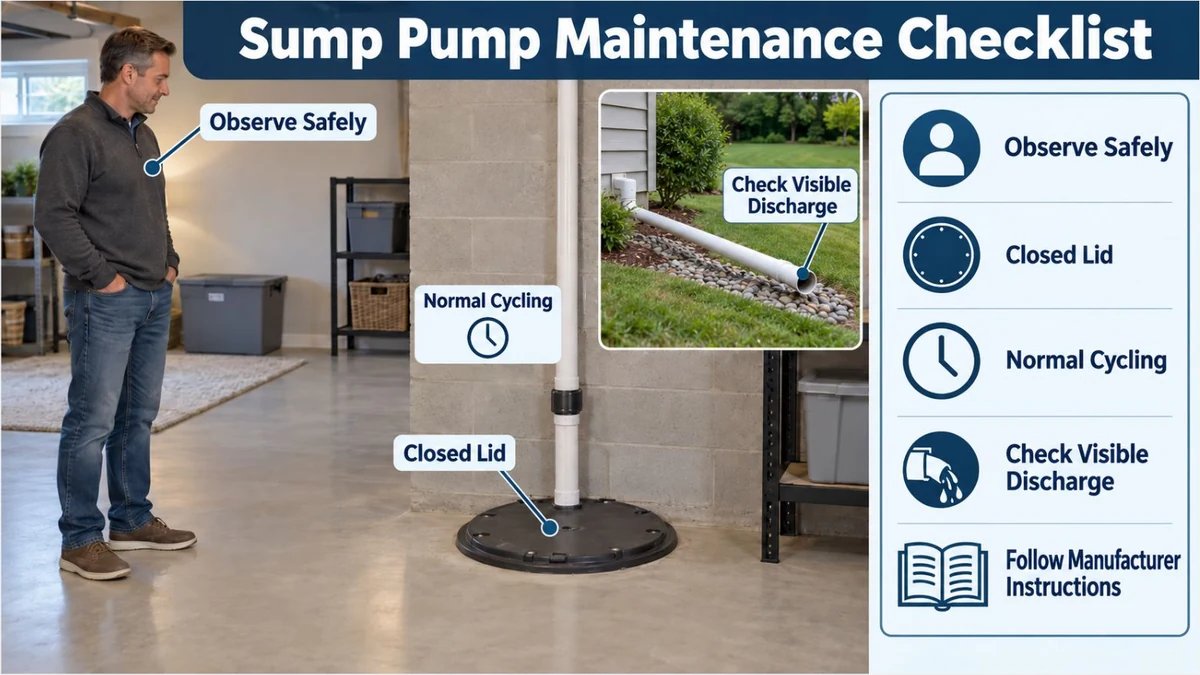
Sump Pump Maintenance Starts With the Manufacturer’s Instructions
Sump pump maintenance is an important part of protecting a basement water management system, but the right approach starts with understanding the specific equipment installed in your home. Pump designs, backup systems, alarms, and recommended checks can vary by manufacturer and model.
Before performing any maintenance, review the owner’s manual and follow the manufacturer’s maintenance schedule and safety instructions. There is no universal inspection interval or fixed replacement lifespan that applies to every sump pump. The correct maintenance approach depends on the specific pump, backup components, controls, and installation.
The goal of homeowner maintenance is awareness: noticing visible conditions, understanding normal operation, keeping records, and recognizing when a qualified professional should evaluate a concern. Routine observation can help identify changes before heavy water events, but a sump pump alone does not guarantee that every basement water problem will be prevented.
A Homeowner Sump Pump Maintenance Checklist
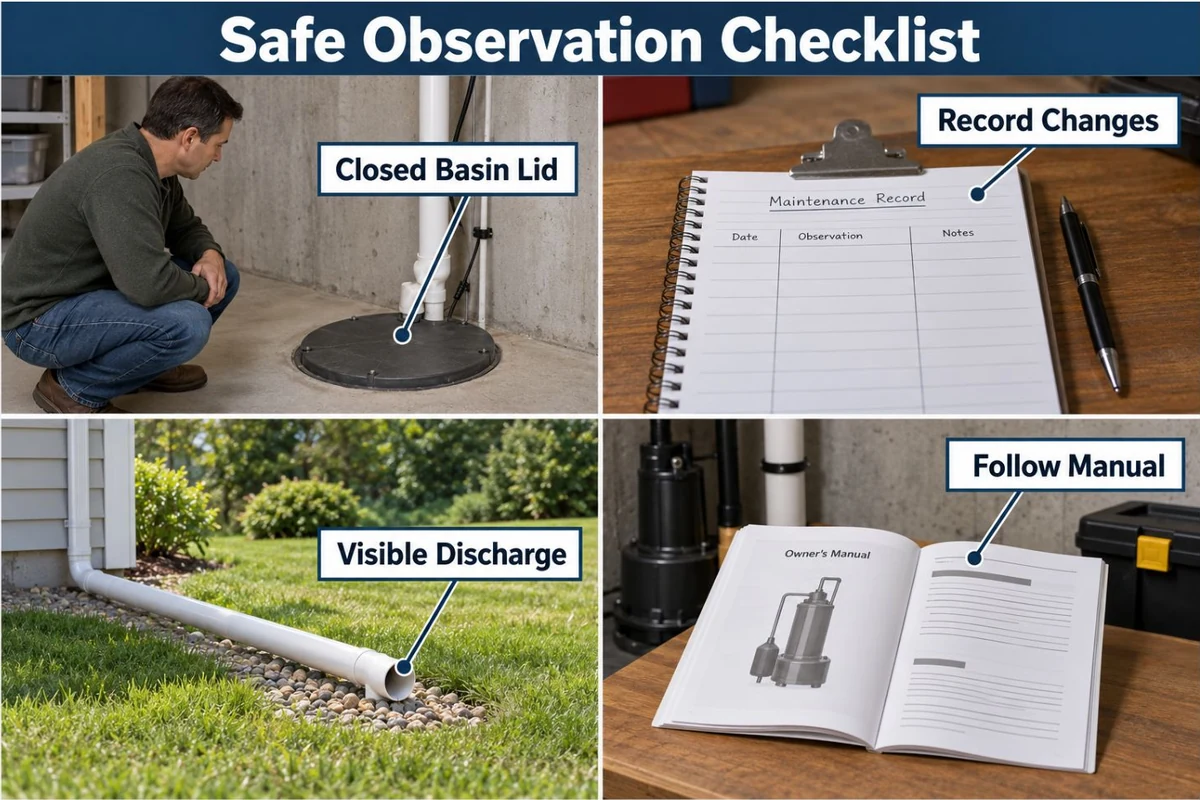
Many useful maintenance steps involve simple visual observations from a safe, dry area. Homeowners can become familiar with how their system normally looks and sounds so unusual changes are easier to recognize.
- Confirm you know the pump model and have access to the owner’s manual.
- Observe whether the pump appears to cycle in a way that matches its usual operation.
- Look at the closed basin lid and accessible surrounding area for obvious changes.
- Check the visible exterior discharge outlet from safe, dry ground for obvious changes such as blockage or damage.
- Pay attention to unusual sounds, repeated alarms, or changes from the system’s normal behavior.
- Keep simple records of observations, manufacturer-recommended checks, and professional evaluations.
A homeowner checklist is intended for awareness and observation. It is not a substitute for professional inspection, repair, internal cleaning, electrical work, or pump servicing.
Understand What Normal Operation Looks Like
One of the most useful maintenance steps is knowing your system’s normal behavior. A homeowner may notice when the pump operates during periods when water conditions around the home change.
Increased pumping during or after wet weather may be expected because more water can reach the drainage system. A different concern is a persistent change from the system’s usual pattern, such as repeated cycling or unusual operation that continues when conditions appear normal. These observations can help determine when further evaluation may be appropriate.
Avoid assuming that a single symptom identifies a specific problem. Multiple components and site conditions can influence how a sump pump system operates.
Check Visible Areas Without Touching Electrical Equipment
Safe sump pump maintenance focuses on observation. Homeowners can visually inspect accessible areas from a dry location, but they should never enter a flooded basement or attempt to inspect equipment in unsafe conditions.
Do not touch energized equipment, wet electrical components, power connections, or wiring. If a basement has standing water, wet electrical equipment, or uncertain electrical conditions, leave the area and seek appropriate professional assistance. The CDC guidance on safely reentering flooded homes discusses electrical hazards and safety considerations after flooding.
Electrical concerns involving wiring, outlets, damaged components, or possible electrical hazards should be handled by a qualified electrician.
Observe the Basin and Lid From a Safe Position
A closed sump basin lid helps protect the system and reduces accidental contact with components. During a visual check, look for obvious changes such as a damaged lid, visible debris around accessible areas, or conditions that appear different from normal.
Do not reach into the basin, bypass the float mechanism, move internal components, or attempt to remove the pump as part of routine homeowner maintenance. Internal cleaning and repairs require appropriate knowledge and safety procedures.
Review the Discharge Outlet and Backup Features
The sump pump system depends on more than the pump itself. The discharge route must allow water to leave the home as intended. From a safe, dry location, homeowners can visually check the exterior discharge outlet for obvious changes, including visible blockage, damage, or a frozen condition where applicable.
Frozen or blocked discharge concerns, check valve problems, and repeated performance issues should be evaluated by a qualified professional rather than corrected through trial-and-error adjustments.
Some manufacturers provide guidance for backup systems, alarms, and maintenance considerations based on the equipment design. The general sump pump information from the Government of Canada explains that system details and backup considerations depend on the installed equipment. Homeowners should follow their own product instructions rather than applying generic procedures.
Follow Model-Specific Alarm and Backup Instructions
Some sump pump systems include alarms, backup pumps, battery systems, or user controls. Homeowners should review the manufacturer manual to understand which checks or tests are specifically authorized for their equipment.
If a manufacturer provides a manual testing function that can be performed from a dry, safe position using a designated user control, follow those instructions exactly. This may allow homeowners to confirm certain system responses without opening the basin or contacting equipment. However, testing that requires electrical work, battery servicing, pump access, component removal, wiring changes, or troubleshooting should be performed by qualified professionals.
Do not create your own testing procedure or modify system components to simulate operation. Manufacturer documentation varies by product. For example, a manufacturer backup-system document such as this example maintenance document demonstrates why battery types, backup features, and instructions can differ between systems.
Keep a Simple Sump Pump Maintenance Record
A maintenance record can help homeowners recognize patterns over time. Simple notes can include observation dates, unusual sounds, alarm activity, visible changes, and professional evaluations.
- Date of observation
- Normal or unusual cycling behavior
- Visible discharge outlet observations
- Alarm or backup system observations
- Questions or concerns requiring professional review
Good records can help explain changes in system behavior and provide useful information if a qualified contractor evaluates the basement water system.
Warning Signs That Need Professional Evaluation
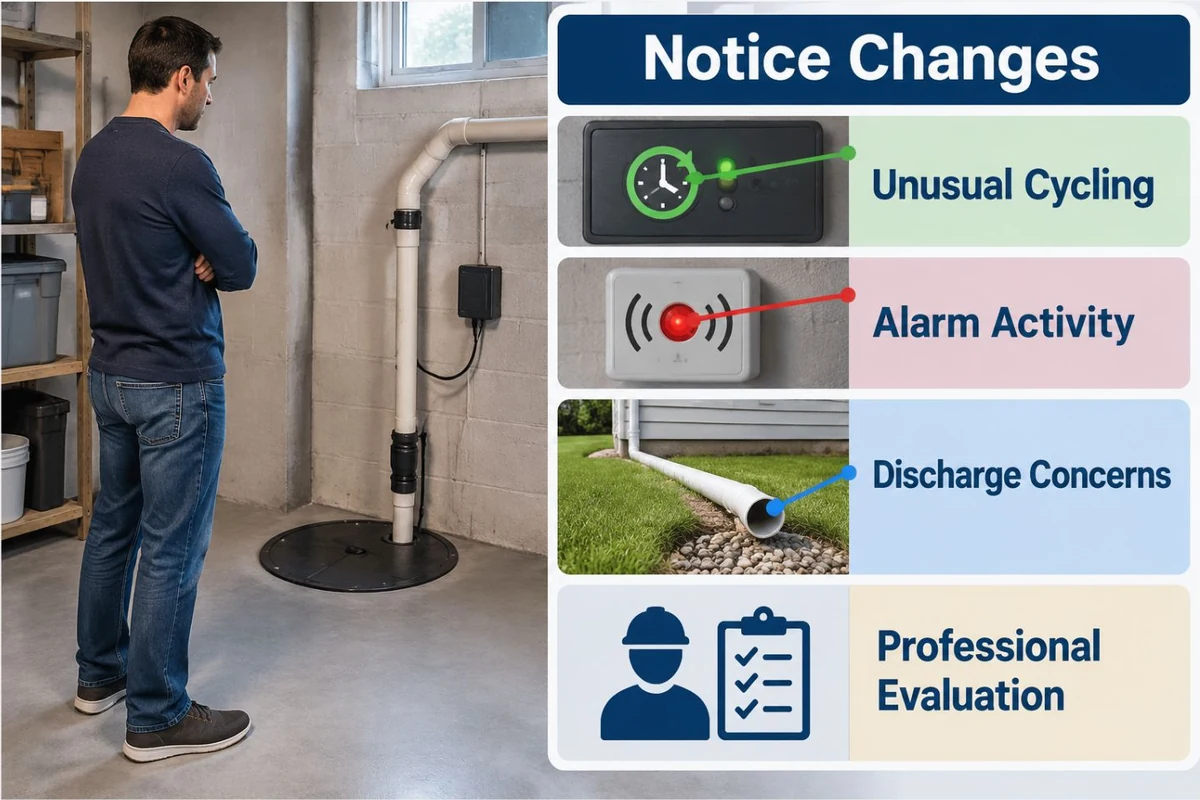
A sump pump concern is not always obvious before a water event. Homeowners should consider professional evaluation when they notice persistent or unusual conditions, including:
- Persistent cycling changes that do not match normal conditions
- Unusual sounds or changes in operation
- Repeated alarms or backup system concerns
- Visible discharge problems
- Signs of water entry or moisture concerns near the basement
- The need for repair, internal cleaning, replacement, or inspection
Basement water concerns can involve different parts of a home’s water management system. A localized leaking foundation crack, for example, may call for a separate foundation crack repair evaluation rather than sump pump maintenance alone. For homeowners with structural concerns involving the foundation, Crack Wizard provides information about foundation repair considerations.
Frequently Asked Questions
How often should I perform sump pump maintenance?
There is no single maintenance interval that applies to every sump pump. Homeowners should follow the manufacturer’s instructions and recommended maintenance schedule for their specific model while performing safe visual observations as needed.
What can I safely check on my sump pump as a homeowner?
Homeowners can safely observe visible conditions from a dry area, including whether the system appears to operate normally, whether the lid is intact, and whether there are obvious changes around accessible components. Avoid touching electrical equipment, reaching into the basin, or attempting repairs.
What are signs that a sump pump may need professional attention?
Warning signs can include unusual sounds, persistent unusual cycling, repeated alarms, visible discharge problems, or concerns that require internal inspection, repair, or cleaning.
Can a sump pump prevent all basement water problems?
No. A sump pump is one part of a basement water management approach. Other water entry issues, such as localized leaks or foundation-related concerns, may require separate evaluation.
Should I test my sump pump by pouring water into the basin?
Homeowners should not use a generic water-pour test unless it is specifically allowed by the manufacturer instructions for their installed system. Follow the equipment manual for any testing procedures and avoid unsafe contact with electrical components.
Prepare Before Heavy Water Events
Before periods when water levels may increase around a home, homeowners can review their maintenance records, confirm they understand normal system operation, and make sure they know where visible components are located.
Preparation should focus on observation and safety rather than unfamiliar repairs. Do not enter a flooded basement, touch energized equipment, or make adjustments that are not covered by the manufacturer’s instructions.
For homeowners in the St. Louis area who are noticing repeated basement moisture concerns, unusual water entry, or questions about how different systems work together, a professional basement water evaluation can help identify areas that may need review. Crack Wizard can help evaluate basement water management concerns through its basement waterproofing information and services.