
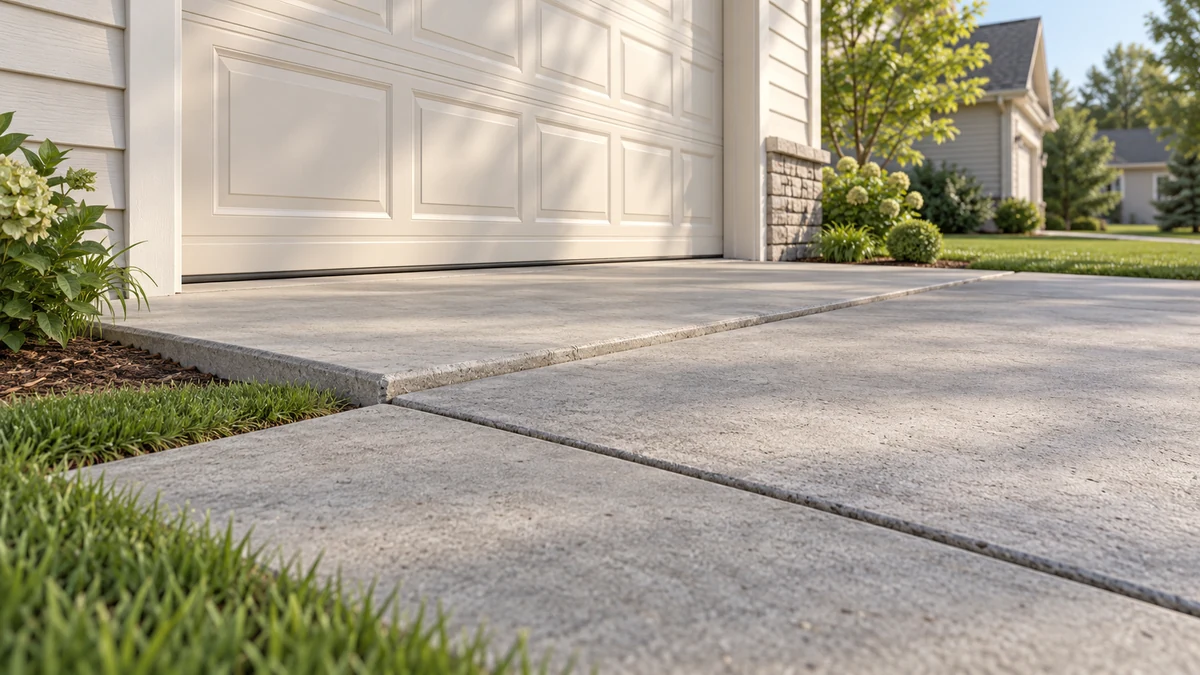
Common sinking driveway causes include settling fill, changes in the soil or stone base, and water carrying supporting material away. Vehicle loads can make weak support more apparent. However, an uneven joint does not tell you which panel moved: one may have dropped, the other may have risen, or both may have changed position.
The useful first step is to document the pattern, drainage, and timing without disturbing the concrete. A driveway evaluation should connect those observations to the condition below the slab and the elevations at the garage and street before anyone proposes a lift.
First, identify what looks different
Describe the location rather than guessing the cause. Is the driveway lower where it meets the garage? Is one corner down, a whole panel tilted, or a narrow strip depressed across the drive? Does water collect in a new place?
A garage floor, driveway apron, sidewalk crossing, and curb may have been built at different times on different support. Their relative heights matter, but none is automatically a fixed reference. A contractor can take elevation measurements to distinguish a localized low panel from a wider pattern of movement.
Also separate surface damage from elevation change. Flaking concrete can make a rough edge without the entire slab sinking. A crack can occur without settlement, while an intact panel can settle without breaking.
Soil and base changes can leave uneven support
Fill that continues to settle
A driveway may cross soil disturbed during home construction, grading, or utility work. If that fill was not adequately compacted, it can compress unevenly after the concrete is placed. A former utility trench is useful history to mention when a low strip follows its route, but that alignment alone does not prove a trench caused the movement.
Changes in the soil itself can also matter. Some soils change volume with moisture, and a supporting layer that shrinks or compresses may no longer contact the slab evenly. The American Concrete Institute’s public overview of slabjacking identifies settlement, erosion, flooding, and soil or base shrinkage as reasons slabs on ground shift.
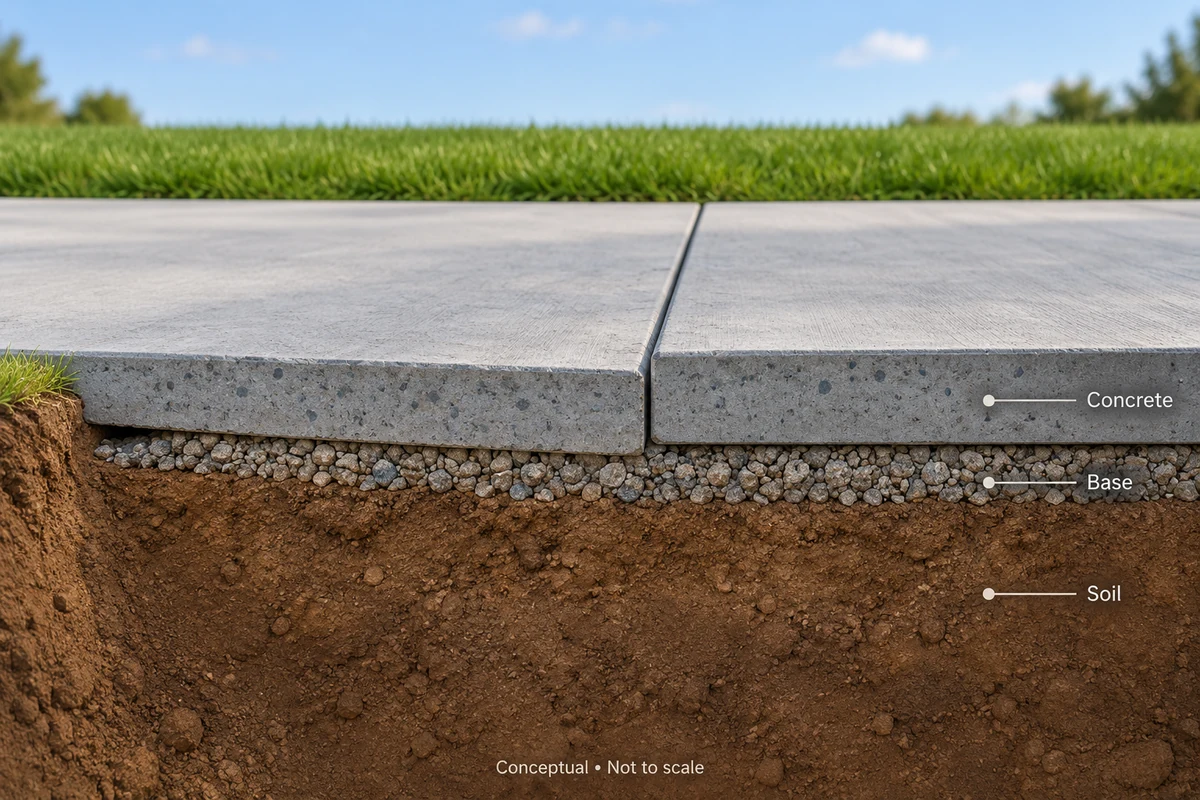
Water and loss of supporting material
Runoff concentrated near a driveway edge, poorly directed roof drainage, or a leaking buried line can be worth investigating. Water can soften susceptible supporting soil; moving water may also carry fine material away. The FHWA discussion of pavement moisture explains how water enters through joints, cracks, and edges, and how moisture and loading can contribute to erosion and uneven pavement. These are general mechanisms, not residential repair specifications.
A puddle is evidence of where water collects, not proof of an underground leak. Likewise, a visible edge gap does not reveal the full extent of missing support. Photograph unusual wet areas, washed-out soil, or sediment after rain. Persistent wetness during dry weather deserves attention from an appropriate drainage or plumbing professional.
Loads acting on a vulnerable slab
Mention changes in use, such as a heavier vehicle, frequent delivery traffic, or construction equipment. Load becomes especially relevant near a weak edge or where support has changed. A driveway’s ability to carry traffic depends on its construction and condition; there is no universal vehicle-weight cutoff that can be established from a photo.
Is it sinking, or is the next panel heaving?
In freezing weather, frost-susceptible soil with available moisture can heave upward. During thaw, support can weaken. The FHWA explanation of frost effects distinguishes frost-related vertical movement from changes in soil support during thawing. That distinction matters when a driveway lip appears in winter and changes again in spring.
Keep dated photos rather than assuming the lower-looking side needs to be raised. Tell the evaluator whether the condition varies seasonally or has progressed steadily. Seasonal movement is useful evidence, but it does not establish a diagnosis or guarantee the surface will return to an acceptable position.
Pay attention to the garage, street, and water path
Driveway geometry has to work as a whole. Raising one panel to match its neighbor may affect another joint, the garage entrance, or where rainfall goes. A driveway generally needs a planned drainage slope; making every section perfectly horizontal is not the goal.
- At the garage: Note a new lip, widening separation, water collecting near the door, or a changed transition from driveway to garage floor.
- At the street: Record changes where the drive meets the apron, sidewalk, curb, or gutter. Ask who controls work in the affected area before repairs are planned.
- Along the sides: Note low landscaping, soil washed away, and downspout discharge locations.
- At joints: Photograph open gaps, damaged joint material, and crumbling edges. Joint maintenance and elevation correction serve different purposes.
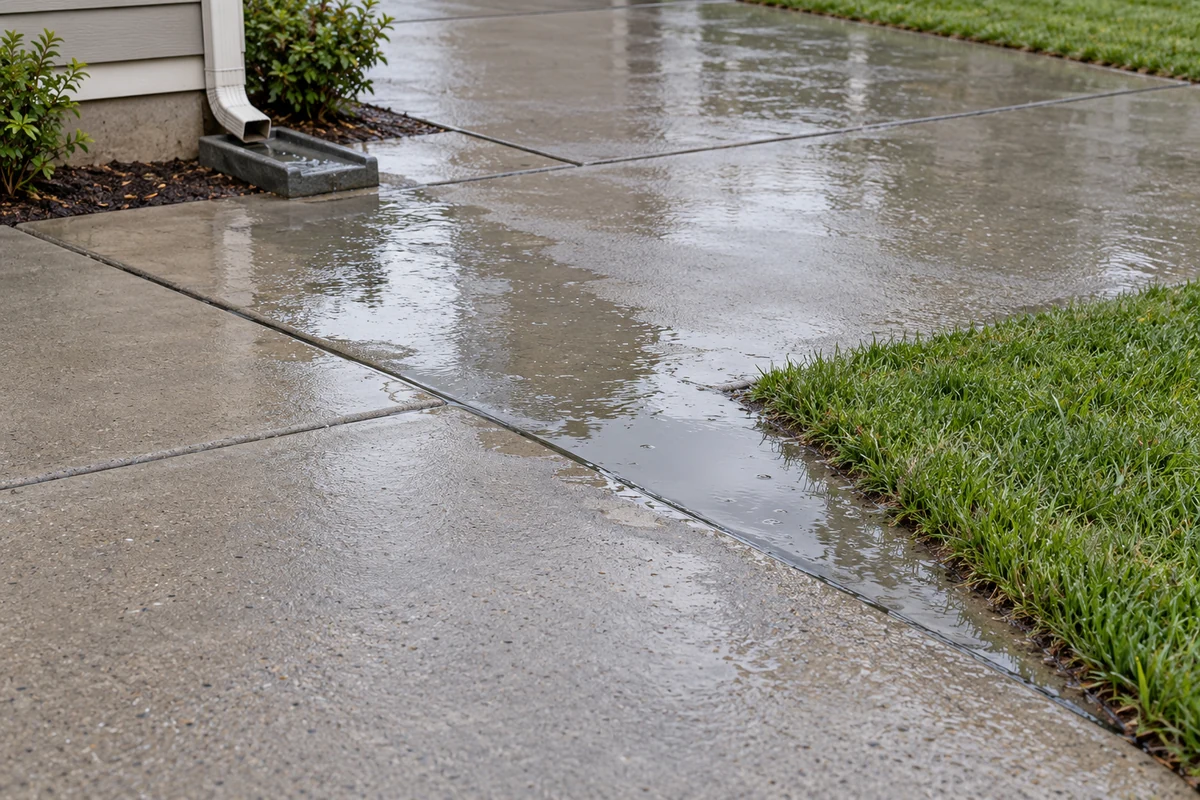
If runoff concerns occur alongside basement seepage, describe both issues during a waterproofing evaluation. A slab adjustment alone should not be assumed to resolve the home’s water-entry problem.
What to document safely before an inspection
Take one wide photo showing the driveway and garage, then closer photos of affected joints from the same positions on later dates. Include the date, recent weather, where standing water appeared, and any known utility repairs or resurfacing. Old listing photos or construction records may help establish whether a transition is new.
Keep observations noninvasive. Do not probe beneath an edge, dig beside the slab, drill test holes, or try to lift it. Avoid testing a questionable panel by driving over it or rocking it. Keep people away from a trip hazard, and avoid parking on an area that appears unstable.
Arrange prompt evaluation for rapidly changing elevations, visible loss of ground, unstable broken sections, or suspected active leakage. If concrete movement accompanies new wall displacement or other building concerns, request a separate foundation assessment. Uneven driveway concrete by itself does not establish foundation failure.
How the findings shape the repair
A professional should explain what appears to have moved, what remains uncertain, and how the proposed work handles the contributing conditions. Lifting may fit a serviceable settled panel when support can be restored and the proposed elevations work with surrounding surfaces and drainage.
Severely broken concrete, unresolved ground movement, or a need to rebuild the drainage geometry may call for another approach. Suspected plumbing problems or continuing erosion may need their own investigation and correction. Ask for the intended elevations at each transition and which drainage or joint repairs are included. A smooth-looking result is only one part of the plan.
Frequently asked questions
Why is my driveway lower where it meets the garage?
The driveway panel may have settled, but the relative step alone does not establish which surface moved or why. An evaluator should check elevations, the joint, drainage, and construction history before setting a repair target.
Does water pooling on my driveway prove there is a leak underneath?
No. Ponding shows a low area or a drainage problem, but it does not identify an underground leak. Persistent wetness in dry weather, unusual runoff, or other suspected plumbing symptoms should be assessed by the appropriate professional.
Can winter frost make a driveway look sunken?
Yes. If one panel heaves, the adjacent panel can look lower even if it did not sink. Freeze and thaw can also change soil support. Dated observations across seasons help a professional distinguish possible movement patterns.
Can an intact driveway panel be lifted?
It may be a candidate if it has settled, remains serviceable, and can be supported at elevations that work with the garage, neighboring panels, and drainage. The assessment should also address contributing ground or water conditions.
Does an uneven driveway mean my house foundation is failing?
Not by itself. Exterior flatwork can move separately from the building foundation. Report any accompanying wall movement or other building changes so those concerns can receive an appropriate separate evaluation.
Get a driveway-specific evaluation
Bring your photos and driveway history to Crack Wizard and discuss its PolyJacking and concrete lifting service. The goal is to understand the movement and choose work suited to the slab, its support, and the water path around your home.