
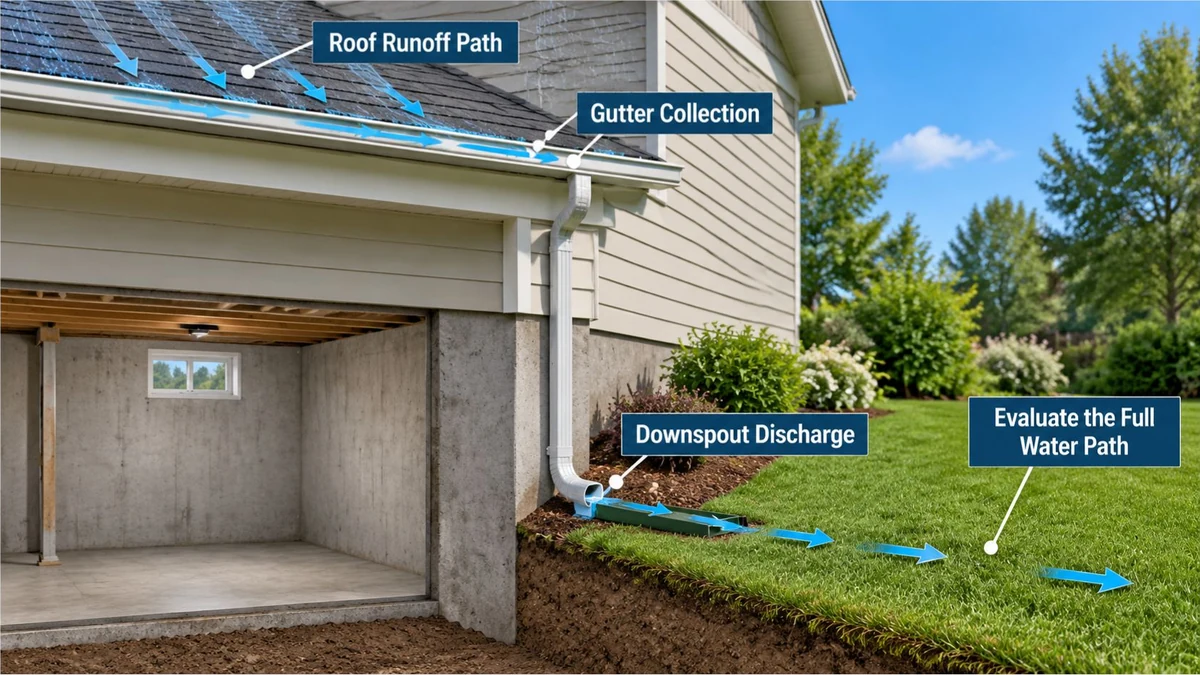
Yes. Clogged gutters, overflow, and poorly located downspout outlets can concentrate roof runoff beside a foundation and contribute to basement water problems. If you suspect gutters causing basement leaks, follow the full water path before deciding on a repair. Rainfall timing is a clue, but groundwater, cracks, condensation, and plumbing can also be involved.
Roof runoff is concentrated because a large roof area collects rainfall and directs it into gutters and downspouts. When that water is not managed effectively, more moisture may collect near the foundation area. However, basement water entry can also involve groundwater conditions, foundation openings, condensation, plumbing problems, or other site-specific factors.
Are Gutters Causing Basement Leaks in Your Home?
The gutter problem and the entry point are two different parts of the investigation. Runoff collecting outside may supply water to a crack, a wall-floor joint, or an opening. Correcting the runoff can reduce that supply, while an existing entry pathway may still need attention. A wet corner near a downspout suggests a connection worth checking; it does not establish the source.
Examples of gutter and downspout conditions that may contribute to moisture concerns include:
- Water overflowing from gutters during rainfall
- Downspouts releasing concentrated runoff close to the foundation
- Disconnected or shifted components that allow water to spill near the home
- Gutter sections that are not moving water as intended
- Site conditions that direct runoff back toward the structure
How Roof Runoff Becomes Concentrated Near a Foundation
Rainwater follows a path from the roof surface to the ground. A typical runoff path includes the roof, gutters, downspouts, discharge location, and surrounding grading.
Without gutters, rainfall spreads across roof edges. With gutters and downspouts, that same rainfall is collected into fewer discharge points. This concentration is useful when the system directs water appropriately, but it can increase moisture near the foundation if the outlet location or surrounding drainage conditions are unfavorable.
For example, water may collect near the home if:
- A downspout releases runoff into an area that already stays wet
- The surrounding ground directs water toward the foundation
- A discharge route becomes blocked or restricted
- Surface features prevent water from moving away naturally
The U.S. Department of Energy’s Building America Solution Center identifies gutters and downspouts as important parts of managing roof runoff and controlling moisture around buildings. Learn more about gutters and downspouts as a moisture control component.
Why Gutter Overflow Does Not Always Mean a Simple Clog
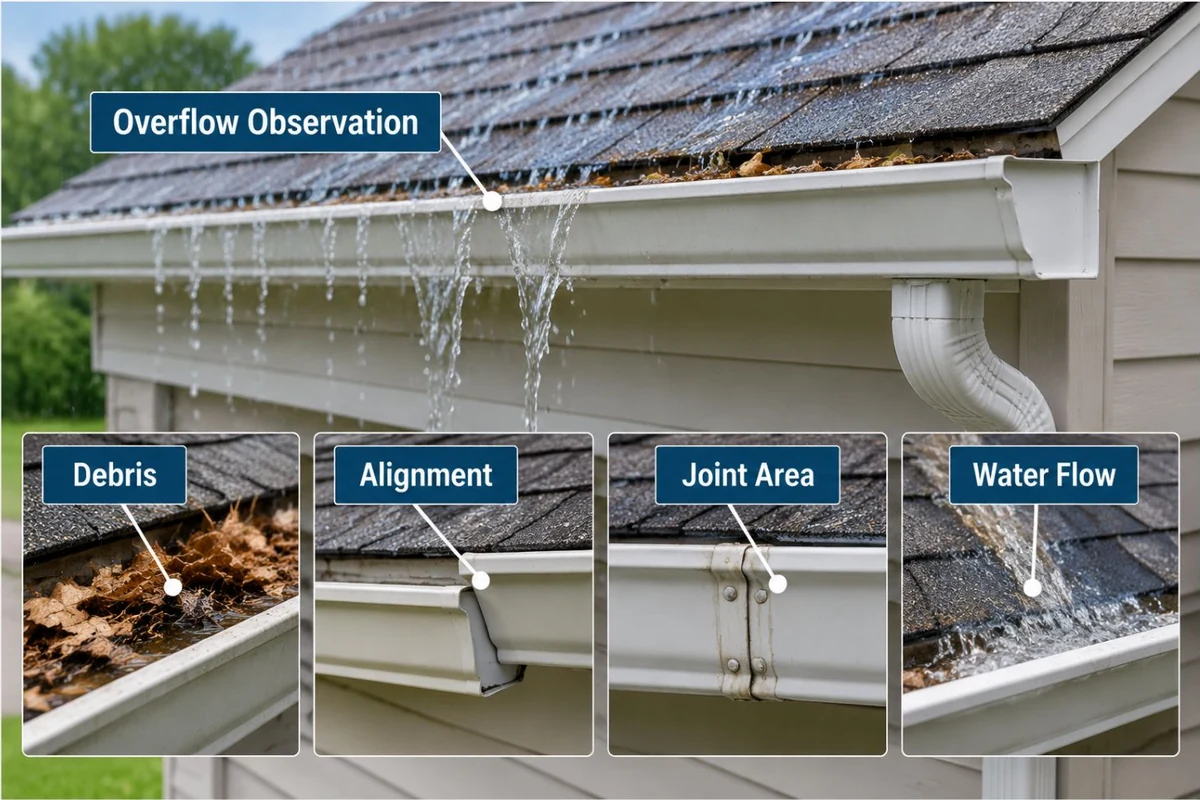
When gutters overflow, debris is one possible explanation, but it is not the only one. Poor gutter slope or alignment and insufficient capacity can also contribute to overflow. Water escaping from a seam or damaged section may resemble overflow from below but involve a different problem.
A homeowner observing overflow should avoid assuming the cause without evaluation. A qualified gutter professional may need to assess gutter condition, installation factors, and water movement through the system.
From indoors during rain, or safe ground only after the weather has passed, useful observations include:
- Noticing where water appears to overflow during rainfall
- Observing whether water exits through expected downspout locations
- Recording visible changes after maintenance or weather events
Do not climb roofs or ladders for this check, go outside during storms, or approach unstable ground. Stay out of flooded areas and away from wet electrical equipment. Leave gutter access, cleaning, and repairs to a qualified professional when safe access is uncertain.
Downspout Extensions Help Only When the Entire Discharge Path Works
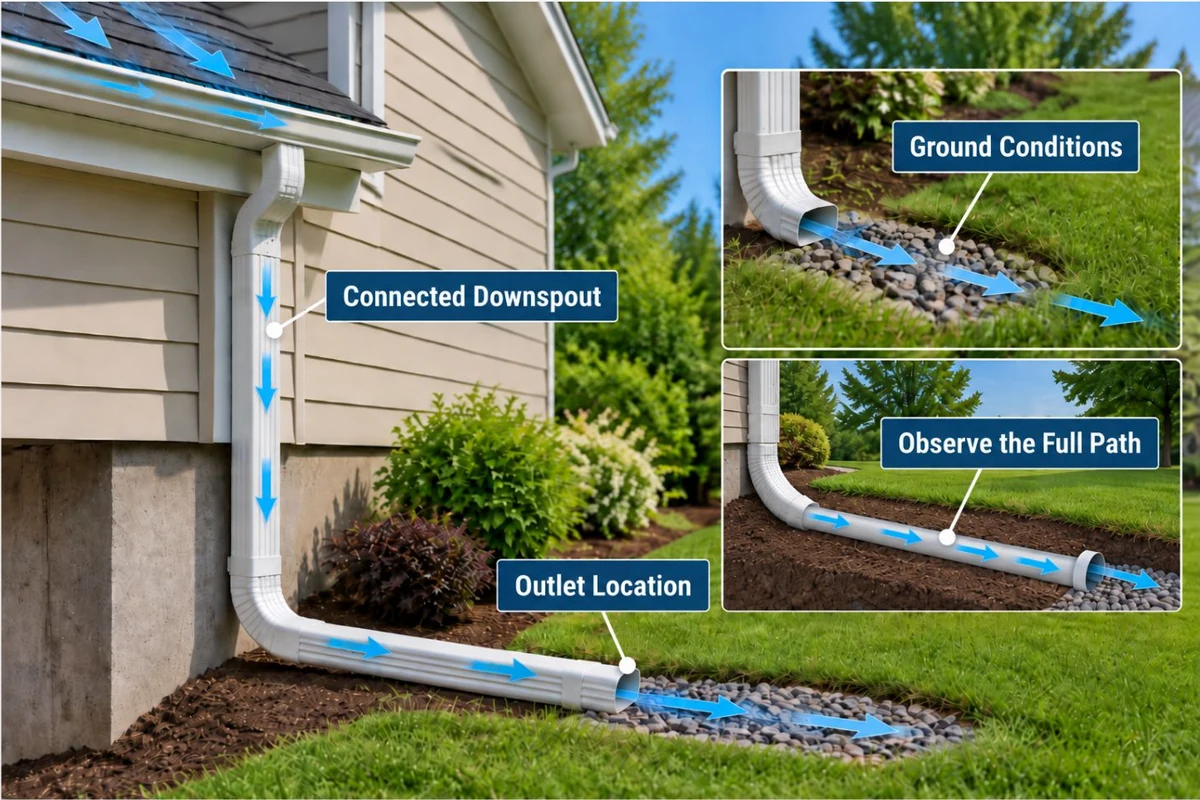
A downspout extension may help move runoff away from a home, but the presence of an extension alone does not confirm that water is being managed effectively.
Water may still return toward the foundation if:
- The outlet location drains back toward the structure
- The surrounding ground is low and collects water
- A buried drainage line becomes blocked or restricted
- An extension shifts out of position over time
The appropriate discharge approach depends on the property layout, surrounding conditions, drainage characteristics, and any applicable local requirements. There is no single extension length or outlet location that works for every home. Have proposed changes checked for a suitable destination, neighboring property impacts, walkways, erosion, and local discharge requirements before altering the route.
When evaluating runoff, homeowners should consider the complete route rather than one component alone: where water leaves the downspout, where it travels afterward, and whether it remains near the foundation.
Grading and Site Conditions Can Change Where Water Travels
Roof drainage and surrounding grading work together. Even a functioning gutter system may not prevent moisture concerns if the site directs water toward the foundation.
A site evaluation may consider:
- The direction surface water travels during rainfall
- Areas where soil or landscaping may collect runoff
- Nearby hard surfaces that influence water movement
- The relationship between discharge points and foundation walls
A downspout can empty beyond a planting bed yet send water back along a sloping walkway. Landscape edging can trap runoff, and settled soil can form a low strip beside the wall. A site evaluation should trace these connections rather than assume that a longer extension alone fixes them.
Basement Moisture May Have Other Causes Besides Roof Runoff
Gutters and downspouts are one possible contributor, but basement moisture can come from several different sources.
Groundwater and Exterior Water Pressure
Water in the surrounding soil may affect basement conditions depending on the property and construction details. Groundwater can supply cracks or joints even when roof runoff is well controlled. Roof water may also contribute to wet soil, so these sources can overlap.
Condensation and Indoor Humidity
Some basement moisture is caused by indoor air conditions rather than exterior water. Warm, humid air contacting cooler surfaces can create condensation that resembles other moisture problems.
The University of Minnesota Extension discusses basement moisture sources and explains that homeowners should consider multiple possible causes when evaluating moisture conditions. Review basement moisture causes and solutions from the University of Minnesota Extension.
Plumbing Leaks or Floor Drain Backups
Water from plumbing systems, appliances, or floor drains can also create basement moisture. The location, timing, and pattern of the water may provide useful clues about the source.
What Homeowners Can Safely Document Before an Evaluation
Good documentation focuses on observations rather than trying to determine the cause.
Homeowners can safely record:
- Photos or notes taken from indoors during rainfall
- Ground-level observations after weather conditions have passed
- The location where moisture appears inside the basement
- Dates of gutter maintenance and later rainfall events
- Whether moisture appears repeatedly under similar conditions
Comparing maintenance dates with later rain events may help identify patterns, but one rainfall event without basement moisture does not prove that a moisture source has been resolved.
If a basement moisture issue continues after visible drainage conditions have been corrected, further evaluation may be appropriate.
When Foundation or Waterproofing Evaluation May Be Appropriate
If water entry continues, identifying the complete moisture pathway can help determine what conditions may need attention.
Basement waterproofing evaluations may consider exterior drainage, water entry locations, and other possible contributors. Learn more about basement waterproofing considerations.
If homeowners observe signs associated with possible foundation movement, such as changes in crack patterns, separation, or other structural concerns, a foundation evaluation may be appropriate. A gutter-related moisture concern does not automatically mean there is foundation damage. Learn more about foundation repair considerations.
For information about cracks specifically, homeowners can also review foundation crack repair considerations and discuss observed conditions with a qualified professional.
The Environmental Protection Agency notes that controlling moisture is an important part of managing mold-related conditions in homes. Learn about moisture control and mold prevention basics.
Frequently Asked Questions
Can gutters cause basement leaks?
Gutters and downspouts can contribute to basement moisture concerns when roof runoff is not managed effectively, but they are only one possible factor. Groundwater, condensation, plumbing issues, and other conditions can also contribute.
How can I tell if roof runoff may be affecting my basement?
Homeowners can look for patterns such as moisture appearing after rainfall, visible gutter overflow, or water collecting near the home. These observations can suggest areas to evaluate but do not determine the cause by themselves.
Can a downspout extension solve a basement moisture problem?
A downspout extension may help direct runoff away from the home, but its effectiveness depends on the entire discharge path and site conditions. Water can still return toward the foundation if surrounding drainage issues remain.
What should I check if my gutters overflow during rain?
Overflow may relate to debris, alignment, joint leaks, damaged sections, or other gutter system conditions. Homeowners should observe from indoors during rain and avoid ladder or roof inspections.
How should I document possible gutter-related basement moisture?
Document observations from indoors during rainfall and from safe ground after weather has passed. Note moisture locations, dates, rainfall conditions, maintenance timing, and recurring patterns without assuming a specific cause.
Get the Roof Runoff and Basement Conditions Evaluated
Gutters and downspouts can influence basement moisture by controlling where roof runoff travels, especially when water becomes concentrated near the foundation. Overflow, poor discharge locations, and surrounding site conditions may all be worth evaluating.
However, a basement leak should not automatically be blamed on gutters. A complete review considers roof runoff, discharge paths, grading, groundwater, condensation, plumbing sources, and visible conditions inside and outside the home.
Crack Wizard provides basement waterproofing, crack repair, and foundation repair for St. Louis-area homeowners. Request an evaluation if water keeps returning, the entry point is unclear, or cracking is changing. Share your runoff photos and maintenance dates so the recommendations can address the conditions actually observed at your home.